- The Healthy Mail
- Posts
- The Menopause Diet That Actually Works: What Changes, What to Eat, What to Avoid.
The Menopause Diet That Actually Works: What Changes, What to Eat, What to Avoid.
You're Eating Less Than at 35 and Gained 15 Pounds. Here's Why Everything That Worked Before Stopped Working.
In partnership with

Good morning Healthy Mail family!
You're 48 years old. For the last 20 years, you could lose 5 pounds in 2 weeks if you just "ate less and moved more."
Not anymore.
Now you're eating the same salads. Doing the same workouts. Actually eating LESS than you did at 35.
And you've gained 15 pounds in 18 months.
Your doctor says "it's just menopause, it happens to everyone" and suggests eating even less. Your trainer says you need to work out harder. The internet says you need to try keto, or intermittent fasting, or eliminate carbs entirely.
You've tried all of it. Nothing works like it used to.
Here's what nobody's telling you: Your body fundamentally changed. The diet and exercise approach that worked at 35 doesn't work at 48. Not because you're doing it wrong. Because your hormones, metabolism, and body composition are completely different now.
Today I'm breaking down exactly what changes during menopause, what to eat (and why), what to avoid (and it's not what you think), and the realistic nutrition strategy that actually works when nothing else does.
This isn't another "eat less, move more" lecture. This is what actually works when your estrogen drops 90% and your body stops responding to the old rules.
What have you tried to lose the menopause weight gain? |
WHAT ACTUALLY CHANGES DURING MENOPAUSE (And Why Everything Stopped Working)
Let's start with the science they don't explain in those 8-minute doctor appointments.
CHANGE #1: YOUR ESTROGEN DROPPED 90%
Estrogen does way more than control your period. It:
Regulates where you store fat (hips/thighs vs belly)
Controls insulin sensitivity (how you process carbs)
Maintains muscle mass (muscle burns calories)
Manages hunger hormones (ghrelin and leptin)
Before menopause: Estrogen keeps fat storage on your hips and thighs. Insulin works normally. You maintain muscle easily.
After menopause: Estrogen drops 90%. Now:
Fat goes straight to your belly (visceral fat, the dangerous kind)
Insulin stops working as well (you're more insulin resistant)
You lose muscle faster (even if you're exercising)
You're hungrier than before (leptin resistance increases)
Translation: The same 1,600 calories that maintained your weight at 35 now causes weight gain at 48. Not because you're eating more. Because your body processes food completely differently now.
CHANGE #2: YOUR METABOLISM DIDN'T SLOW DOWN (Your Muscle Mass Did)
Everyone says "your metabolism slows down with age."
That's not quite right.
Your basal metabolic rate (BMR) only drops about 2-4% per decade. That's 40-80 calories per day. That wouldn't cause 15 pounds of weight gain.
What actually happened: You lost muscle mass.
Women lose 3-8% of muscle mass per decade after age 30. During menopause, that accelerates to 1-2% per YEAR.
Muscle burns 3x more calories than fat, even at rest.
The math:
Lose 5 pounds of muscle = Burn 150-200 fewer calories daily
Over 18 months = 20-25 pounds gained (if you eat the same amount)
The brutal cycle:
Menopause → Estrogen drops → Muscle loss accelerates
Less muscle → Lower metabolism
Lower metabolism → Weight gain
You eat less to compensate
Eating less → Lose MORE muscle (body burns muscle for energy when calories are too low)
Less muscle → Even lower metabolism
Cycle continues
This is why "just eat less" makes everything worse during menopause.
CHANGE #3: YOUR INSULIN SENSITIVITY DROPPED 40%
Your cells don't respond to insulin the way they used to.
What this means in real life:
Before menopause: Eat a bowl of pasta. Insulin moves glucose into cells. Blood sugar stays stable. Energy is good.
After menopause: Eat the same pasta. Insulin doesn't work as well. Blood sugar spikes higher, stays elevated longer. Your pancreas makes MORE insulin to compensate. High insulin = fat storage mode.
Result: The same carbohydrates that were fine before now cause:
Blood sugar crashes (you're exhausted by 2pm)
Fat storage (especially belly fat)
Increased hunger (insulin resistance increases cravings)
This is why the "balanced plate with whole grains" advice that worked before doesn't work anymore.
CHANGE #4: YOUR HUNGER HORMONES WENT HAYWIRE
Leptin (the "I'm full" hormone) stops working as effectively.
Ghrelin (the "I'm hungry" hormone) increases.
Translation: You're hungrier than you were before menopause, even when eating the same amount of food. Your brain literally doesn't get the "stop eating" signal as clearly.
This is why willpower feels impossible. It's not a discipline problem. Your hunger hormones are biologically different now.
WHAT TO EAT (The Menopause-Specific Strategy)
Now that you understand what changed, here's what actually works.
The Cozy Winter Ritual Behind My Energy and Glow ✨
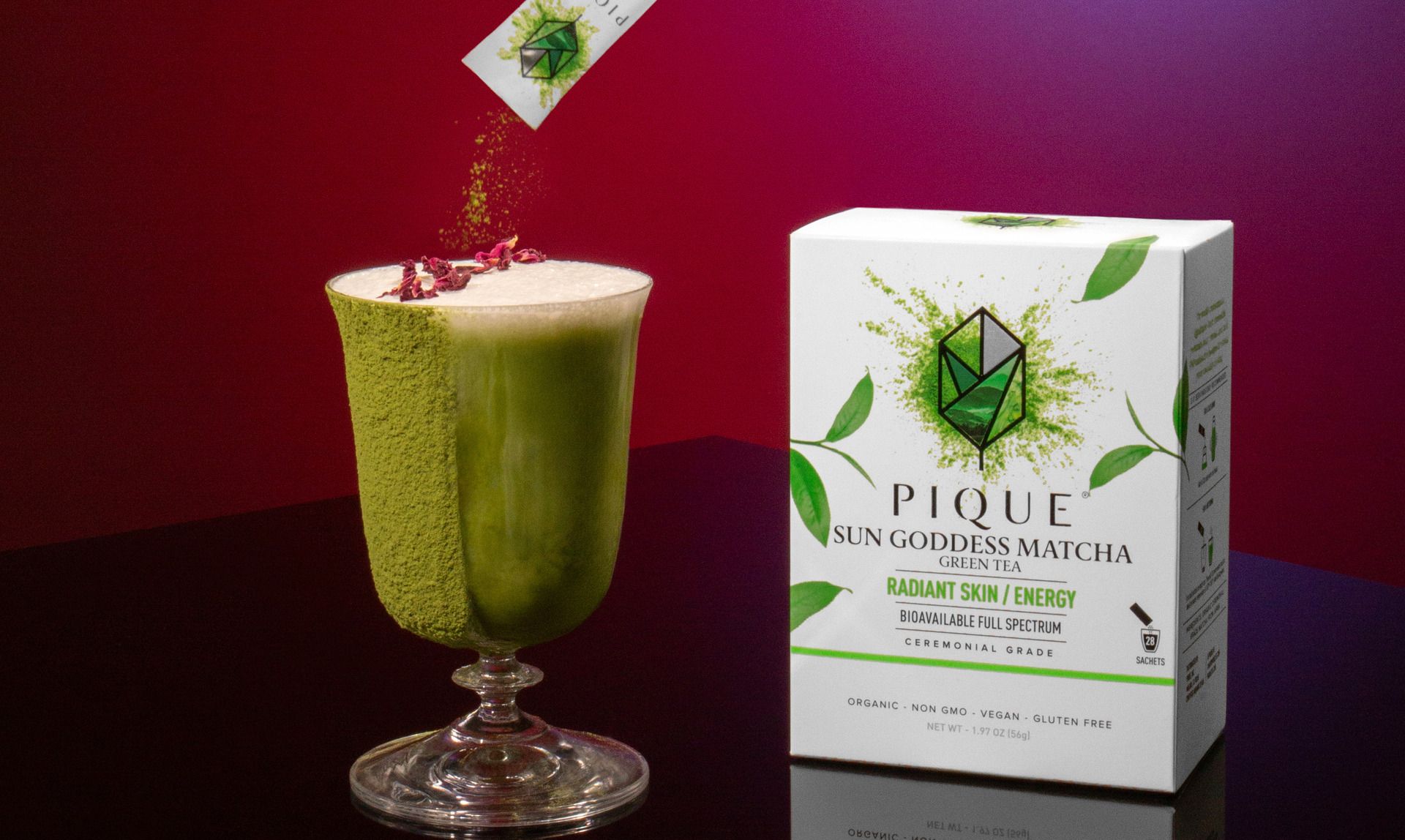
Winter calls for rituals that actually make you feel amazing—and Pique’s Sun Goddess Matcha is mine. It delivers clean, focused energy with zero jitters, supports glowing skin and gentle detox, and feels deeply grounding on cold mornings. Smooth, ceremonial-grade, and crave-worthy, it’s the easiest way to start winter days clear, energized, and glowing from the inside out
PRIORITY #1: PROTEIN (Way More Than You Think)
Before menopause, you could maintain muscle on 60-80g protein daily.
Not anymore.
New target: 100-120g protein daily
Why so much?
You're losing muscle faster (need protein to maintain it)
Your body is less efficient at using protein (need more to get same effect)
Protein keeps you full longer (helps with increased hunger)
Protein has highest thermic effect (burns calories just digesting it)
What this looks like:
Breakfast: 30-35g protein
3 eggs + Greek yogurt
Protein smoothie with 2 scoops protein powder
4 oz smoked salmon + 2 eggs
Lunch: 35-40g protein
6 oz chicken breast + quinoa bowl
Tuna salad (made with 2 cans tuna)
Large Greek yogurt bowl with nuts
Dinner: 35-40g protein
6-8 oz steak, salmon, or chicken
2 chicken thighs + vegetables
Beef stir-fry with vegetables
Total: 100-115g protein daily
The difference this makes:
Maintains muscle mass (keeps metabolism up)
Reduces hunger (protein is most satiating)
Stabilizes blood sugar (protein slows glucose absorption)
Burns more calories (digesting protein burns 25-30% of its calories)
PRIORITY #2: HEALTHY FATS (Don't Be Afraid)
Low-fat diets are especially bad during menopause.
Fat:
Doesn't spike insulin (good for insulin resistance)
Keeps you full (prevents snacking)
Supports hormone production (you need fat to make hormones)
Helps absorb vitamins A, D, E, K
Good fats to eat daily:
Avocado
Olive oil
Nuts and seeds (almonds, walnuts, chia, flax)
Fatty fish (salmon, sardines, mackerel)
Grass-fed butter
Eggs (whole eggs, not just whites)
Target: 50-70g fat daily
This is NOT low-fat. This is moderate-fat. And it works better for menopause than low-fat ever did.
PRIORITY #3: STRATEGIC CARBS (Not Elimination)
You don't need to go keto. But you DO need to be strategic about carbs now.
The new rules:
Carbs that work during menopause:
Vegetables (unlimited)
Berries (lower sugar impact than other fruits)
Sweet potatoes (fiber slows glucose)
Quinoa, brown rice (small portions, paired with protein)
Oats (steel-cut, not instant)
Carbs to minimize:
White bread, pasta, rice
Sugary foods (obviously)
Fruit juice
Processed "whole grain" products
Low-fat products with added sugar
The timing matters:
Eat carbs with protein and fat (slows glucose absorption)
Have your largest carb serving post-workout (insulin sensitivity is higher)
Reduce carbs at dinner (insulin sensitivity is lowest at night)
Target: 100-150g carbs daily (this is moderate-carb, not low-carb)
PRIORITY #4: SPECIFIC NUTRIENTS FOR MENOPAUSE
Calcium + Vitamin D:
Bone density drops rapidly during menopause
Target: 1,200mg calcium, 2,000-4,000 IU vitamin D
Sources: Dairy, sardines (with bones), leafy greens, supplements
Magnesium:
Helps with sleep, mood, muscle function
Target: 400-500mg daily
Sources: Nuts, seeds, dark chocolate, leafy greens
Omega-3 fatty acids:
Reduces inflammation
Supports brain function (helps with menopause brain fog)
Target: 2-3g daily
Sources: Fatty fish, flaxseeds, walnuts, fish oil supplement
Fiber:
Helps with blood sugar control
Reduces estrogen dominance symptoms
Target: 25-30g daily
Sources: Vegetables, chia seeds, flaxseeds, berries
WHAT TO AVOID (It's Not What You Think)
AVOID #1: EXTREME CALORIE RESTRICTION
"Just eat 1,200 calories and you'll lose weight."
No. This backfires during menopause.
Here's why:
1,200 calories = Not enough protein to maintain muscle
Not enough protein = Muscle loss accelerates
Muscle loss = Metabolism drops further
You lose weight initially (mostly muscle)
Then plateau hard
Gain it all back (plus more) when you eat normally again
What works instead: Eat 1,600-1,800 calories with high protein. You'll lose weight slower, but you'll maintain muscle and actually keep it off.
AVOID #2: LONG CARDIO SESSIONS
"Just do more cardio."
Cardio doesn't preserve muscle. During menopause, that's a problem.
What happens:
You do 60 minutes of cardio daily
Burn 400-500 calories
But you're losing muscle mass (because cardio doesn't build muscle)
Lower muscle = Lower metabolism
You have to do MORE cardio to see same results
Eventually you're doing 90 minutes daily just to maintain weight
What works instead:
Strength training 3-4x per week (maintains muscle)
Walking 8,000-10,000 steps daily (movement without muscle loss)
Reduce cardio to 2-3x per week maximum
AVOID #3: ALCOHOL (This One Hurts, But It's True)
Alcohol hits differently during menopause.
What changed:
Your liver doesn't process alcohol as efficiently
Alcohol increases estrogen (sounds good, but creates estrogen dominance)
Alcohol disrupts sleep (you already have sleep issues)
Alcohol increases belly fat storage specifically
Alcohol increases hot flashes
The honest advice:
Limit to 2-3 drinks per WEEK (not per day)
Or eliminate it for 30 days and see if symptoms improve
Most women notice significant improvement in sleep, hot flashes, and weight when they cut alcohol.
AVOID #4: INTERMITTENT FASTING (For Most Women)
IF works great for men and younger women.
For perimenopausal and menopausal women? Often backfires.
Why:
Fasting increases cortisol (stress hormone)
High cortisol + low estrogen = Belly fat storage
Fasting can worsen sleep issues
Can increase muscle loss if protein intake isn't high enough
Exception: If you're already doing IF and it feels good, keep doing it. But if it's making you stressed, irritable, or you're not seeing results, stop.
WHAT A DAY OF EATING ACTUALLY LOOKS LIKE
Here's a realistic example (not Instagram perfect, actually doable):
BREAKFAST (7:00am):
3 eggs scrambled in butter
1/2 avocado
1 cup berries
Black coffee
Calories: 450 | Protein: 24g | Fat: 32g | Carbs: 18g
LUNCH (12:30pm):
6 oz grilled chicken breast
Large salad (spinach, cucumbers, tomatoes)
Olive oil + balsamic dressing
1/4 cup nuts
Apple
Calories: 520 | Protein: 45g | Fat: 25g | Carbs: 28g
SNACK (3:30pm):
Full-fat Greek yogurt (1 cup)
Handful of almonds (1 oz)
Calories: 280 | Protein: 22g | Fat: 18g | Carbs: 12g
DINNER (6:30pm):
6 oz salmon
Roasted Brussels sprouts with olive oil
1/2 cup quinoa
Calories: 550 | Protein: 42g | Fat: 28g | Carbs: 32g
DAILY TOTALS:
Calories: 1,800
Protein: 133g
Fat: 103g
Carbs: 90g
Why this works:
High protein maintains muscle
Healthy fats keep you full
Moderate carbs don't spike insulin
1,800 calories supports metabolism (not 1,200)
Distributed protein throughout the day
THE REALISTIC TIMELINE
You need a meal plan designed specifically for this phase of life.
A plan that:
Hits 100-120g protein daily
Includes healthy fats (not low-fat)
Strategic carbs (not elimination)
Keeps you full (not hungry and miserable)
1,600-1,800 calories (not starvation)
That's exactly why I created The Complete Healthy Eating Bundle.
Here's what you get:
✅ 180 recipes across 6 complete collections - Breakfast, Lunch, Dinner, Smoothies, Snacks, and Desserts
✅ Every recipe is high-protein - 25-40g protein per meal (makes hitting 100-120g daily easy)
✅ Healthy fats included - Real butter, olive oil, avocado, nuts (not low-fat garbage)
✅ Moderate-carb approach - Strategic carbs, not elimination
✅ Menopause-friendly portions - 1,600-1,800 calorie range (not 1,200 starvation)
✅ Quick preparation - 20-30 minutes (you don't have energy for complicated cooking)
✅ Satisfying meals - High protein + healthy fats = actually full
You'll never again:
❌ Try another 1,200-calorie plan that destroys your metabolism
❌ Wonder why the same diet that worked at 35 doesn't work now
❌ Lose weight only to gain it all back (plus more)
❌ Feel constantly hungry and miserable
❌ Lose muscle while trying to lose fat
Instead, you'll:
✅ Eat 1,600-1,800 calories and actually lose weight
✅ Hit 100-120g protein daily without thinking about it
✅ Stay full and satisfied (not constantly hungry)
✅ Maintain muscle while losing fat
✅ Have energy throughout the day (no 2pm crashes)
180 recipes. Every single one designed to work with menopause, not against it.
Get The Complete Healthy Eating Bundle here
(Use code: “2026” to get 70% OFF)
Stop fighting your body with the same strategies that worked 15 years ago. Start eating for the body you have now.
Here's to finally understanding what changed and what to do about it,
How Was Today's Edition? |
P.S. - The biggest mistake women make during menopause? Eating LESS when they should be eating MORE PROTEIN. The 1,200-calorie plans destroy your muscle mass and tank your metabolism. The Complete Bundle keeps you at 1,600-1,800 calories with 100-120g protein daily. You lose weight slower than you did at 35, but you actually keep it off. And you're not miserable and hungry the entire time. That's how you win during menopause - by working with your new hormones, not fighting them.